





































































































































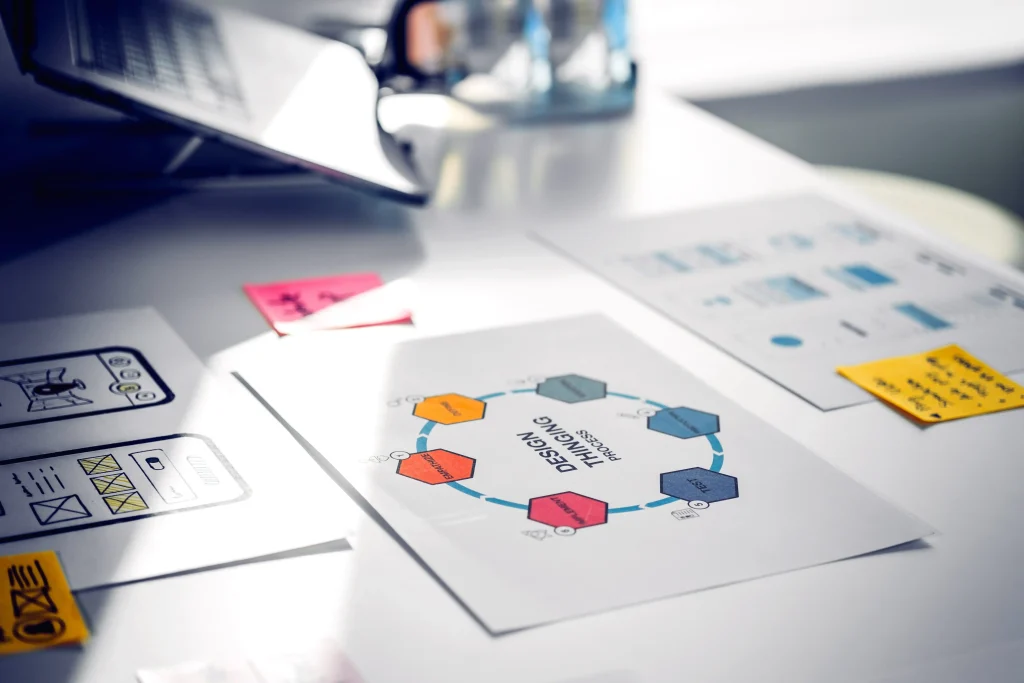




Designing a Seamless User Experience: Best Practices for Marketers:
-
Admin_Techhub / 4 years
- June 20, 2022
- 0
- 6 min read


A seamless user experience (UX) is essential for any successful marketing strategy. In today’s digital landscape, customers expect websites, apps, and digital platforms to be intuitive, responsive, and easy to navigate. A poor UX not only frustrates users but also drives potential customers away, negatively impacting your conversion rates and brand reputation.
For marketers, designing a seamless UX is not just about aesthetics—it’s about creating a journey that guides your audience from discovery to action with minimal friction. In this blog, we will explore best practices for designing a seamless UX that enhances your marketing efforts and ultimately boosts conversions.
1. Prioritize User-Centered Design:
The foundation of a seamless UX is understanding the needs, behaviors, and pain points of your target audience. User-centered design (UCD) ensures that every element on your website or app is created with the user’s goals in mind.
To implement UCD:
-
Conduct user research: Use surveys, interviews, or focus groups to gather insights about your audience’s needs, preferences, and challenges.
-
Create personas: Build detailed customer personas based on your research to guide design decisions. These personas should include demographic information, goals, challenges, and preferred behaviors.
-
Map user journeys: Understand the steps users take to complete key actions on your site, such as making a purchase or signing up for a newsletter. Identify potential obstacles and optimize these pathways.
By designing with the user in mind, you ensure that every element of the user experience serves a purpose and contributes to an intuitive journey.
2. Simplify Navigation:
Cluttered or confusing navigation is one of the main reasons users abandon websites. A seamless UX relies on easy-to-follow navigation that allows users to find what they’re looking for quickly and with minimal effort.
Best practices for simplifying navigation:
-
Keep it intuitive: Use familiar menu structures, such as horizontal navigation bars or simple dropdowns, to avoid overwhelming users.
-
Limit choices: Too many options can confuse users. Stick to the essentials and make sure your menu items align with users’ needs and expectations.
-
Use clear labels: Menu items should be self-explanatory. Avoid jargon or complex terms and instead use simple, concise language that reflects users’ mental models.
By simplifying navigation, you reduce the cognitive load on your users, making it easier for them to accomplish their goals.
3. Optimize for Mobile Devices:
With more people browsing and shopping on mobile devices, having a mobile-optimized website is crucial. A seamless UX means that your website should function just as smoothly on a smartphone or tablet as it does on a desktop.
Here’s how to ensure a mobile-friendly experience:
-
Responsive design: Ensure that your website’s layout automatically adjusts to fit any screen size, from mobile phones to large desktop monitors.
-
Fast loading times: Mobile users expect fast-loading pages. Compress images and optimize code to minimize load times.
-
Touch-friendly interface: Make sure buttons and links are large enough for users to tap easily on mobile devices, without any frustration.
Mobile optimization is no longer optional—it’s essential for providing a seamless experience across all devices.
4. Improve Load Time and Performance:
A slow website is one of the biggest turn-offs for users. Studies show that 53% of mobile users abandon a site that takes more than 3 seconds to load. A seamless UX requires fast load times, which can directly impact both user satisfaction and conversion rates.
Best practices for improving website performance:
-
Minimize HTTP requests: Reduce the number of elements on your page (e.g., images, scripts) that require requests to the server.
-
Compress images and files: Large images and videos can significantly slow down page loading. Use image compression tools and optimize videos for faster performance.
-
Use a Content Delivery Network (CDN): A CDN helps deliver content faster by caching static assets across multiple servers worldwide.
By ensuring that your website loads quickly, you keep users engaged and reduce bounce rates.
5. Streamline Forms and Checkout Processes:
A frictionless user experience means minimizing obstacles to completing key actions, such as filling out forms or making a purchase. Complex or lengthy forms can lead to frustration and cart abandonment.
Here’s how to streamline these processes:
-
Keep forms short: Only ask for the essential information. The more fields you add, the more likely users are to abandon the form.
-
Use autofill options: If possible, enable autofill for fields like name, address, and email to make the process faster.
-
Offer guest checkout: Allow users to check out without creating an account. Forcing users to register can discourage them from completing the purchase.
-
Progress indicators: If a process requires multiple steps (such as a checkout flow), use a progress bar to show users how many steps are left.
The easier it is for users to complete their goals, the more likely they are to take the desired action.
6. Use Consistent Design Elements:
Consistency is key to creating a seamless UX. When design elements are inconsistent, it can confuse users and make your website feel unprofessional. Ensure that your design elements—such as buttons, fonts, colors, and icons—are consistent throughout your website or app.
Here’s how to ensure design consistency:
-
Follow a style guide: A style guide helps maintain uniformity in design, ensuring that colors, fonts, and visual elements remain consistent across your platform.
-
Use familiar design patterns: Stick to established design conventions. For example, use blue for clickable links and place the navigation menu at the top or on the left side of the screen.
-
Reinforce brand identity: Make sure that your design aligns with your brand’s personality and message. Consistent branding creates a cohesive experience that reinforces trust.
By using consistent design elements, you enhance the user experience and make your site easier to navigate.
Conclusion:
Designing a seamless user experience requires understanding your audience’s needs, simplifying navigation, optimizing for mobile, improving load time, streamlining key processes, and maintaining design consistency. By focusing on these best practices, marketers can create a user-friendly experience that not only delights visitors but also drives conversions. In today’s competitive digital landscape, investing in a seamless UX is essential for building trust, increasing engagement, and achieving long-term success.